və ya https:// mövcudluğunu yoxlayın. Həssas
məlumatlarınızı yalnız rəsmi, təhlükəsiz saytlarda paylaşın.
və ya https:// mövcudluğunu yoxlayın. Həssas
məlumatlarınızı yalnız rəsmi, təhlükəsiz saytlarda paylaşın.




The proactive service mechanism introduced in 2019 has laid the foundation for a new phase of governance in the field of social protection, particularly with regard to pensions and benefits
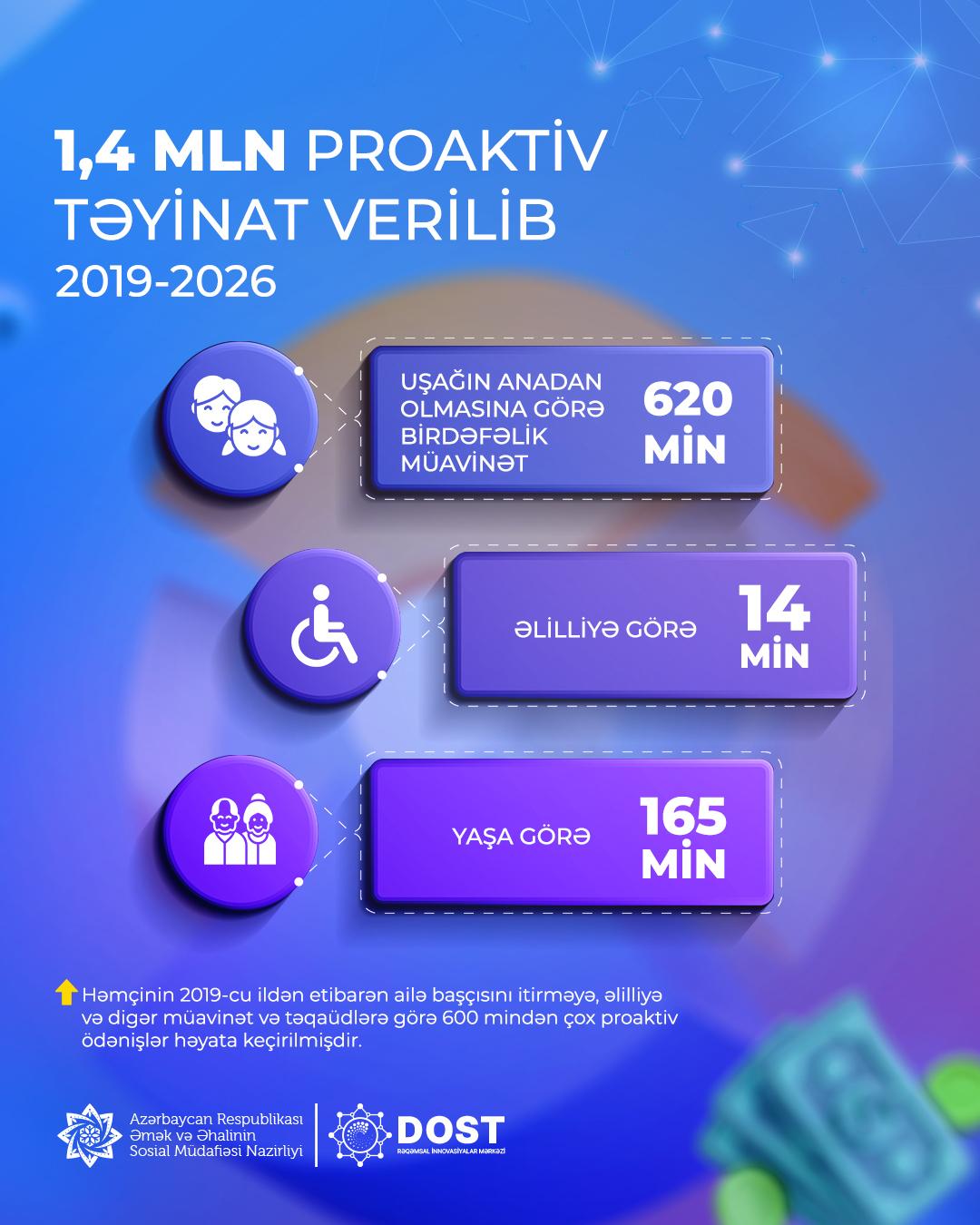
The proactive service mechanism introduced in 2019 has enabled the adoption of a new approach to governance in the field of social protection—particularly in the assignment of pensions and benefits—and has contributed to improving service quality. By making the process of determining social payments simpler, more agile, and more results-oriented, this mechanism is grounded in the application of modern public administration principles in state services.
The primary objective of the proactive mechanism is to enhance transparency and operational efficiency, increase citizen satisfaction, and ensure that individuals can exercise their social rights without unnecessary loss of time or resources. Thanks to this approach, in many cases there is no longer a need to submit an application; the collection and submission of documents is minimized, and services are delivered in a more convenient and faster manner.
Over the period in question, 1.4 million proactive determinations have been carried out by the Ministry of Labour and Social Protection of the Population. This figure confirms the expanded scope of proactive services within the social protection system, the further digitalization of processes, and the delivery of services in formats that are more accessible and closer to citizens.
The proactive approach refers to the automatic identification of a citizen’s entitlement to social protection, and the execution of the corresponding assignment, on the basis of available data—without requiring the citizen to submit an application. This model creates a more convenient service experience for citizens, reduces reliance on the human factor, and ensures that social protection procedures are conducted more accurately, systematically, and transparently.
The implementation of proactive services is one of the key indicators of a fast, transparent, and citizen-centred service model in the social protection sphere, and digital innovations in this direction continue to be advanced.